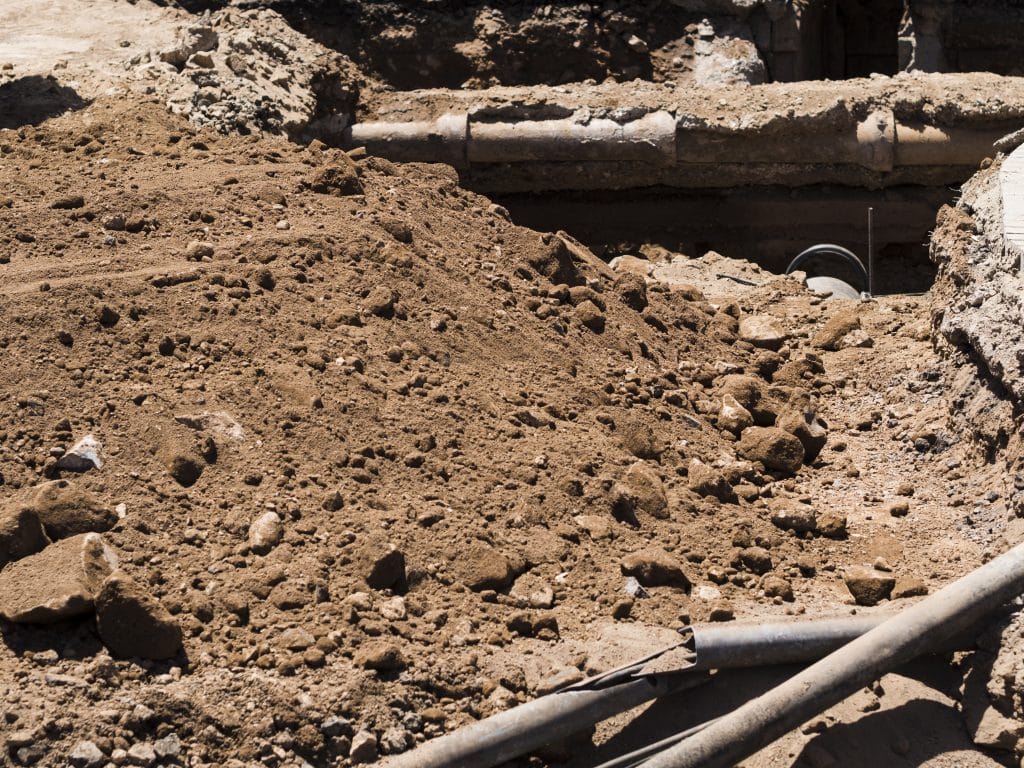
Tree root damage to a sewer line raises a liability question before it raises a repair question: whose tree did it, and does that change who pays. The pipe is broken either way, but the answer is different depending on whether the roots came from your own tree, a neighbor’s, or one the city planted in the parkway strip.
Most states treat a healthy tree’s spreading roots as nobody’s legal fault, which means a healthy neighbor’s tree rarely creates a bill for anyone but you. That changes the moment the tree was already dead, diseased, or known to be hazardous and its owner did nothing about it. Here is how each ownership scenario plays out, and what actually proves which tree is responsible.
Tree root damage to a sewer line: the three ownership scenarios
Before anything else, figure out which of three situations you are actually in. The rule, and your realistic options, are different for each one.
| Whose tree | Typical rule | What changes it |
|---|---|---|
| Your own tree | You pay; it is your property damaging your own line | Nothing – it is both your tree and your pipe |
| A neighbor’s healthy tree | Usually no liability for ordinary root spread | The tree was already dead, diseased, or known to be hazardous and ignored |
| A city-owned street tree | Governmental immunity often applies | A narrow negligence exception, and only if you meet a short notice deadline |
Your own tree: why this one is almost always on you
If the roots came from a tree on your own property, there is no one to sue. You own the tree, you own the lateral it damaged, and the law has no third party to assign the loss to. This is a maintenance decision, not a legal one: a root intrusion in an aging clay or cast iron line tends to come back after clearing unless something stops the roots permanently, and a root barrier only slows new growth rather than fixing an existing crack.
A neighbor’s healthy tree: the legal test most states use
Most states that have ruled on this follow a version of what is sometimes called the Massachusetts Rule for encroaching vegetation. In a 2018 case reaffirming it, the Massachusetts Supreme Judicial Court restated that owners cannot sue their neighbors for any damage caused by an overhanging healthy tree. The remedy the law gives you instead is self-help: cut back whatever crosses onto your side of the property line, at your own expense, without needing the neighbor’s permission or a court order.
That changes for a tree that was already unhealthy. Courts applying this rule have also said an owner has an obligation to deal with a tree that is dead, decayed, or otherwise unsound, and can be liable for harm it causes once that condition was known or should have been obvious. The practical test is less about the roots themselves and more about whether the tree was a known hazard before it caused damage, not merely alive and growing where its roots eventually spread.
This is not universal. A handful of states, Hawaii among them, reject the no-liability approach and let a neighbor recover when encroaching roots or branches cause real harm. Which rule your state actually follows is not something to guess at from a general guide; a local real estate or property attorney can tell you in a single phone call, and it is worth that call before you threaten a claim you cannot win.
In nearly every state, the fastest and cheapest fix for root intrusion from a neighbor’s tree, or a city tree, is the one the law already gives you: cut the roots back at your own property line.
A legal claim is realistically available only when the tree was already known to be dead, diseased, or hazardous, and its owner, private or municipal, did nothing about it.
A city-owned street tree: immunity, and a deadline that starts immediately
A tree in the parkway strip or planted by the city along the curb is still a city tree, and claims against a government over tree maintenance run into governmental immunity far more often than claims between neighbors do. Routine maintenance decisions, like how often to inspect or prune street trees, are typically treated as discretionary choices a city cannot be sued over. The narrow exception is the same one that applies to a private neighbor: a tree the city already knew was hazardous and failed to address.
Even where a claim is possible, it runs on the clock, not on the damage. The same notice-of-claim deadlines that apply to a sewer backup caused by the public main apply here too, and they can be short enough to expire before a homeowner has even finished paying for the repair. File the notice first and argue the merits after, not the other way around.
What actually proves which tree caused the damage
Whoever you believe is responsible, you need more than a guess before you ask them to pay. In order:
- Get a camera inspection first, to confirm roots are the actual cause and not a separate defect like an offset joint or a belly in the line.
- Locate the specific tree the roots trace back to, using the camera footage, the pipe’s depth and path, and the position of nearby trees above it.
- Check whether the responsible tree’s trunk sits on your property, a neighbor’s, or public right-of-way; a few feet either side of the line changes which scenario above applies.
- For a neighbor’s or city tree, document the tree’s condition before the damage if you can: prior complaints, visible decay, or dead limbs strengthen a claim far more than the root intrusion alone.
When a claim is realistically worth filing
Most root intrusion cases end where they started: with a camera inspection, a cleared or relined pipe, and no one else paying for it. Filing a claim against a neighbor or a city only makes sense when you can show the tree was a known hazard beforehand, and even then the city route has a filing deadline that outruns most people’s patience. If your homeowners policy has a service line endorsement, that is usually a faster path to getting the pipe fixed than waiting on a liability claim to resolve.
This explains general liability patterns for tree root damage to a sewer line; it is not legal advice for a specific dispute, and the rule varies by state and city. Source: Harvard Law School faculty commentary on Shiel v. Rowell, Massachusetts Supreme Judicial Court, 2018. Not a substitute for a licensed local attorney or a camera inspection. See the Methodology and Disclaimer.
Can I make my neighbor pay for root damage to my sewer line?
Usually not if the tree is healthy. Most states treat a healthy tree’s spreading roots as nobody’s fault, and the remedy is cutting the roots back at your own property line. That changes if the tree was already known to be dead, diseased, or hazardous before it caused the damage.
Is a city responsible for tree root damage from a street tree?
Rarely, because routine tree maintenance is usually treated as a discretionary government function protected by immunity. A claim becomes possible only if the city already knew the specific tree was hazardous, and it still has to be filed within a short notice-of-claim deadline.
Does homeowners insurance cover tree root damage to a sewer line?
Rarely on a standard policy. Most exclusions treat gradual root intrusion as wear and maintenance rather than sudden damage, though a separate service line endorsement often closes that gap.
What proves the roots came from a specific tree?
A camera inspection confirming roots are the actual defect, combined with the pipe’s depth and path and the location of nearby trees, is the usual evidence. Matching root entry points to a tree’s likely root spread is more reliable than guessing from the nearest trunk.
Can I cut roots on a neighbor's tree myself?
In most states, yes, up to your own property line, without needing permission. Cutting roots on the neighbor’s side of the line, or cutting enough to threaten the tree itself, can create liability of its own, so stop at the boundary.


